001 • Leaving the shelter
Heat & cold as teachers during the longest nights of my life.
Very few people cherish winter, and the ones I know who do are mostly hardcore skiers. The cold, the darkness, the many layers to wear… Winter comes with a set of challenges that can make life feel less inviting and it is commonly framed as a season to manage, or even to survive. Rarely as one to enjoy.
What is interesting is that this relationship with winter is relatively recent. Humans lived in close dialogue with seasonal rhythms until the Industrial Revolution. That shift marked a turning point, as technologies and modern lifestyles accelerated our separation from natural cycles, flattening the contrasts between seasons and softening their edges.
Work, sport, social activities, ambitions, projects. It is worth asking what genuinely belongs to the society we inhabit and demands adaptation, and what we consciously choose to keep engaging with, regardless of the time of year.
Maintaining a nearly uniform pace throughout the year has become achievable thanks to a vast, often invisible shelter that exists above and around us. I’m referring here to a context I’m lucky to know well: one that is resourceful, fortunate, and largely safe.
“Shelter”
— A place giving temporary protection from bad weather or danger
— A shielded or safe condition; protection.
Following that sense of awareness, when I notice mild discomfort in daily life, how long does it take before I remove it? I am cold, so I add a layer or prepare something warm to drink. I feel low, and comfort food becomes an easy solution. All of this is lucky. It’s also wonderful. The subtle risk, though, lies in becoming too accustomed to ease. Over time, sensitivity dulls and what once felt like a choice becomes an automatic response.
For me, cultivating awareness around these moments has become a deliberate practice, driven by curiosity. By a desire to experience what else might be available.
Winter Immersion
This year, instead of escaping winter, I chose to step into it.
That opportunity came through Ferus Animi // Terra Nova, a movement research collective I discovered in the summer of 2025. At the time, a space that had offered me a strong sense of belonging had just imploded. I was still bruised, but also open to something new meeting me where I was. Ferus did exactly that, far beyond my expectations. I was looking forward to studying and practicing with them again.
Here begins a small time jump. If we rewind to a month ago, I was in Tromsø, Norway, for a week. The city, located about 350 kilometers north of the Arctic Circle, hosted the Winter Movement Immersion led by Tom English, founder of the collective. Alongside fifteen other people, we experienced polar winter and explored how seemingly simple elements, such as heat and cold, can teach us about self-regulation.
Arriving in Tromsø immediately set the tone. There was a quiet, placid energy that asked me to slow down. Remote places have a way of preserving their integrity. Nature, when left undisturbed, holds its character without apology and surrounded by mountains, twilight, and crisp air, I felt both awe and respect.
I was mesmerized by the landscape and, at the same time, disoriented. At 1:30 in the afternoon, the sky was already pitch black. A long stretch of darkness awaited us, the first of several days, or nights, like that.
The Winter Immersion unfolded with a precise intention: to welcome winter’s invitation to meet ourselves. The methodology was equally clear. Learning happens when theory is completed by direct experience. One without the other leaves a gap.
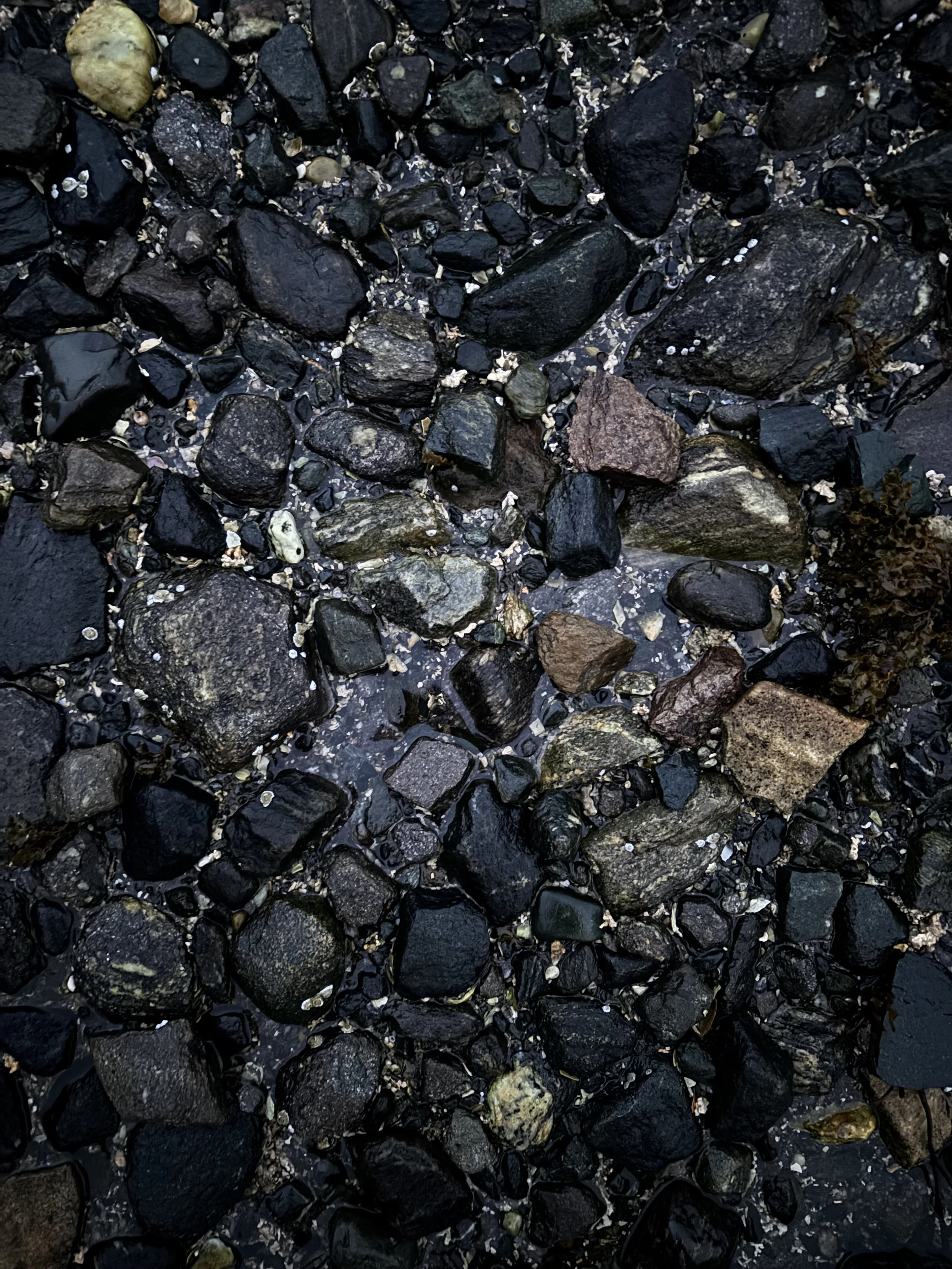
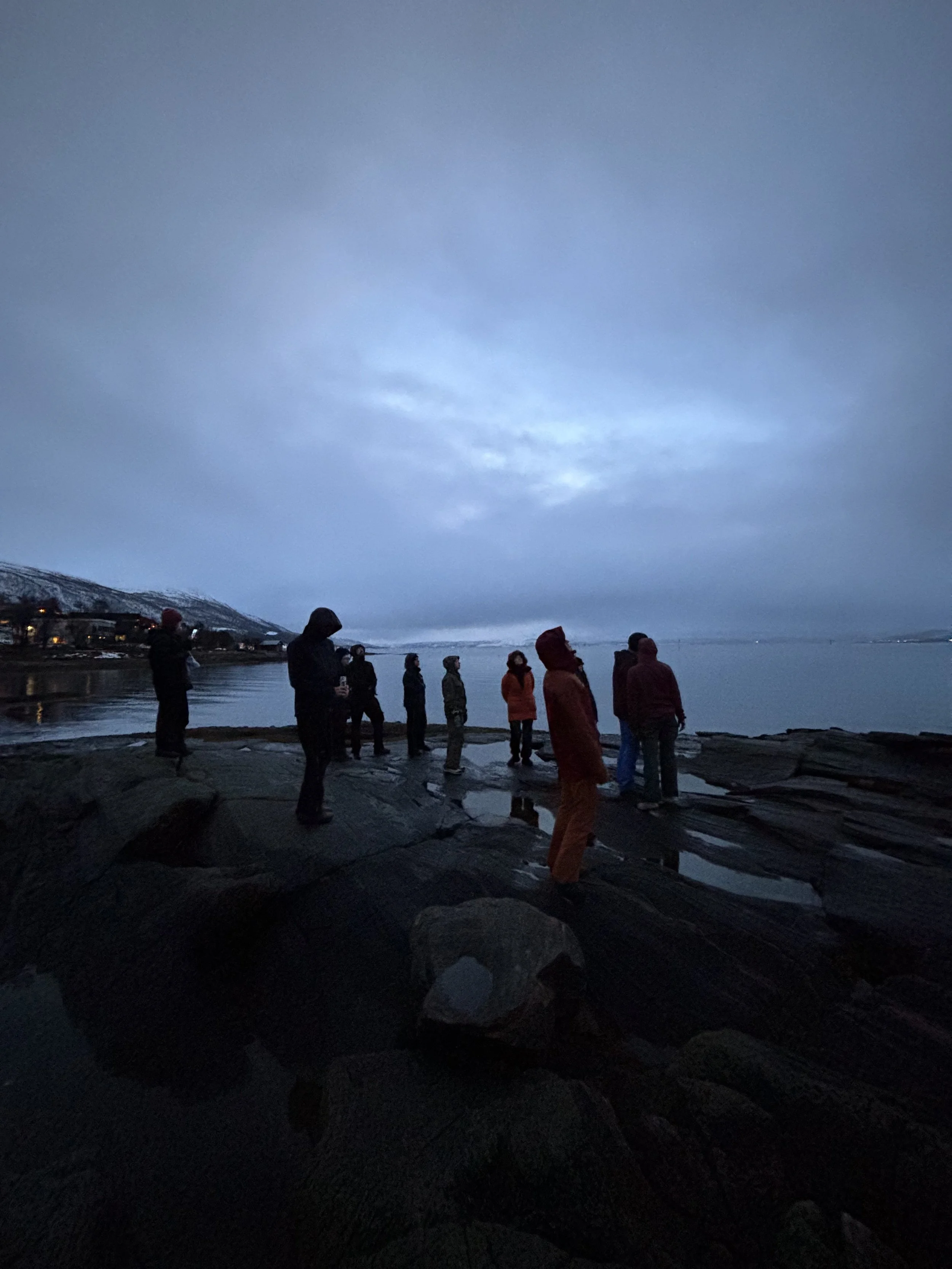
Each morning, we hiked to a different spot to practice a daily form: a sandy beach, a snowfield, or dark rocks. The sun never rose, yet each day carried a distinct quality. The first felt dreamy, the sky brushed with pink. The last was heavy and nostalgic, dark grey clouds above our heads matching black rocks beneath our feet.
Practicing something familiar in an unfamiliar environment immediately created an experiential field. We began warm from the hike and then moved for about ninety minutes. What to wear? How warm would I get? Would the wind pick up? Would it rain? None of these questions could be answered in advance. Common sense helped, but presence mattered more. Adjusting in real time became the skill, and that also meant making some mistakes.
Temperature was only one aspect. Thick pants restricted movement, snow boots altered balance, gloves dulled sensitivity in the fingers. Every choice was a compromise. Could I remain content with a practice that was limited by the conditions and by my own decisions? These questions resurfaced daily, as no two days were alike.
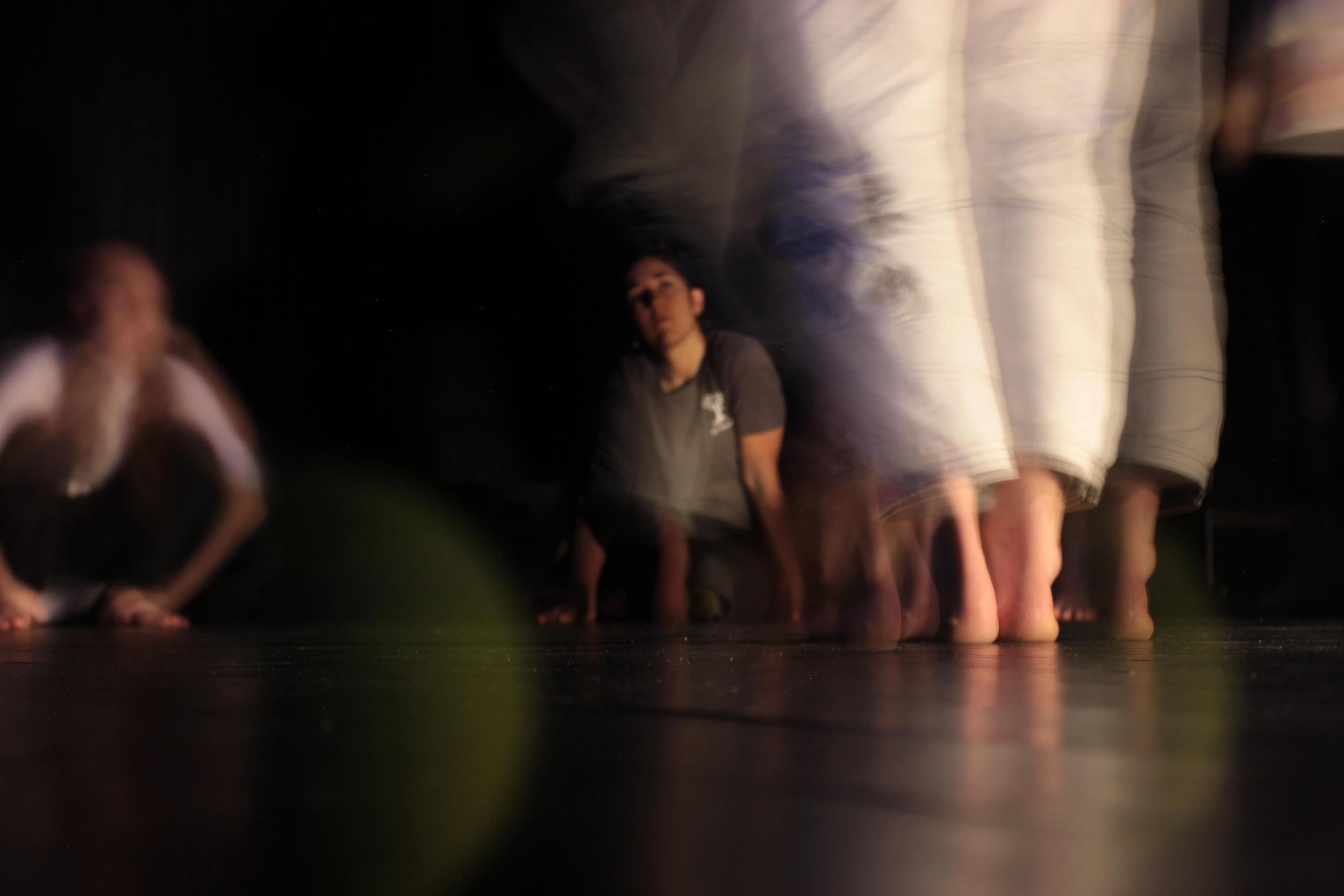
Afternoons were spent indoors, in a studio within the city theatre, which became our nest. We explored theory together, discussing the autonomic nervous system, circadian rhythms, diaphragmatic breathing, and the physiology of hibernation.
Although some of the conditions might suggest the idea of survival training, the experience was never about endurance. Instead, it was a living application of a precise cycle:
Intention → Experience → Reflection → Wisdom
One that can repeat endlessly, and is particularly beneficial when held with curiosity and playfulness. It’s a way of engaging with life that leaves room for lightness, even when things might feel intense.
To do this, we had to step outside the shelter of constant comfort. In doing so, other qualities surfaced. For me, they were intimacy, awe, and resilience.
Two Cups
The week’s schedule was designed to stimulate both branches of the autonomic nervous system. Equal care was given to understanding what was happening and to feeling it directly.
One afternoon, under the soft glow of a lamp, Tom drew a half circle on a piece of paper. At the top sat homeostasis: the body’s dynamic ability to maintain balance despite external change. Moving down the left side, we entered the sympathetic realm, associated with activation and engagement. On the right, the parasympathetic, where activities inducing rest, calm, and restoration live.
At the extremes lay states best avoided for prolonged periods: overwhelm on one side, numbness on the other.
Two cups were then placed on the table. A black one on the left for the sympathetic nervous system, and a red one on the right for the parasympathetic. We were invited to name what, in our lives, fills each cup. With every contribution, a drop of water was poured into the corresponding cup.
Very quickly, the black one overflowed while the red one barely reached halfway. This, apparently, happens often. I felt the challenge myself of being specific, aware, and honest.
These days, stress and anxiety have become frequent companions in modern life. Knowing what helps us recalibrate is a much-needed skill and one worth investing in. To not habituate, and to keep sensitizing instead.
The exercise revealed few truths.
What fills each cup is deeply personal and continuously evolving.
We cannot jump abruptly from one state to another. By learning what fills the red cup, we don’t eliminate stress; instead, we increase our capacity to hold it, and the black cup becomes larger.
It is suggested to avoid associating either nervous system with “good” or “bad.” We need both, but we must learn how to navigate that space and the different states that might arise.
Throughout the week, we repeatedly met our tolerance thresholds through chosen exposure: to weather, to darkness, to communal living. Each moment offered information, and the invitation to meet ourselves kept whispering as a gentle reminder of what winter can truly provide.
White Awe
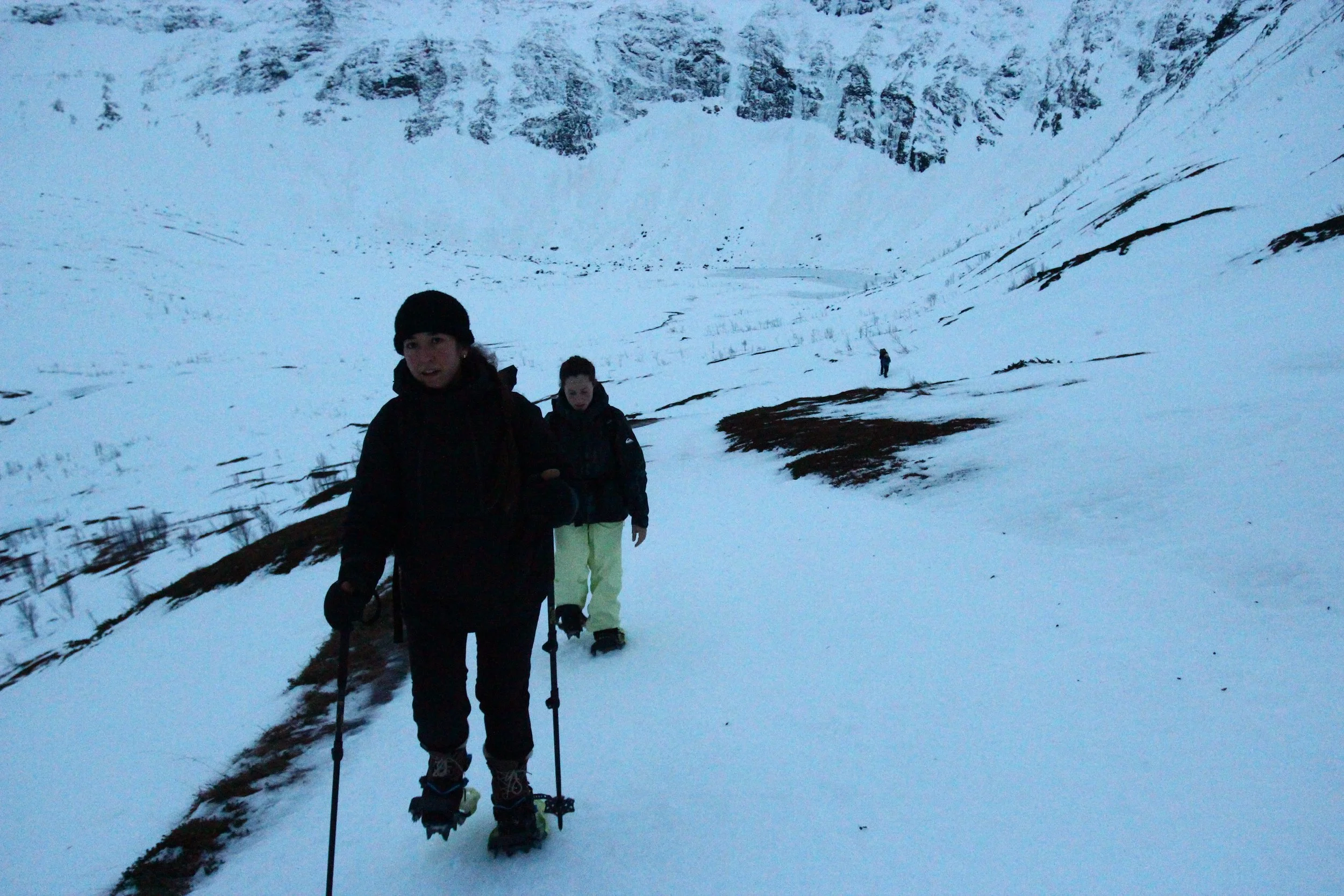
Hike day was the peak of the immersion. We left town at 8 a.m. in complete darkness and returned around 4 p.m., again in darkness, after walking 21 kilometers. There was no goal or sense of competition that day. We simply had a direction and a shared commitment to listen.
We carried food and water for the day. There were no facilities along the way; just endless snowfields, trails, and trees encased in ice. The mindset was key: nothing to endure, everything to notice.
Sixteen people experienced the day in sixteen different ways. Simple check-ins like “mind feels…” and “body feels…” created honesty and cohesion. Attuning to ourselves and each other became part of the learning. Needs were voiced and met: more food, a slower pace, a pause. Individuality enriched the group rather than fragmenting it.
Around midday, we reached a point where we paused for a few minutes before heading back. There, civilization never arrived. Mountains, sky, and ground blended into a vast, undefined white. Silence became tangible, to the point that even swallowing felt intrusive. In that stillness, my own existence felt both small and profoundly meaningful. The vastness of wild nature has a way of stripping things back, and what remains can be deeply revealing about the perspectives we hold. That image lives within me, and has already resurfaced in the past weeks when I needed a moment of tranquillity.
On the way back, I clearly felt the moment when I met my threshold. City lights reappeared, and my feet ached inside unfamiliar shoes. Energy was low, and social engagement felt impossible. I named it, and it was received with understanding. We walked on, home arrived, and my feet touched the ground. The rest of my body followed – grounded again.
Fireworks
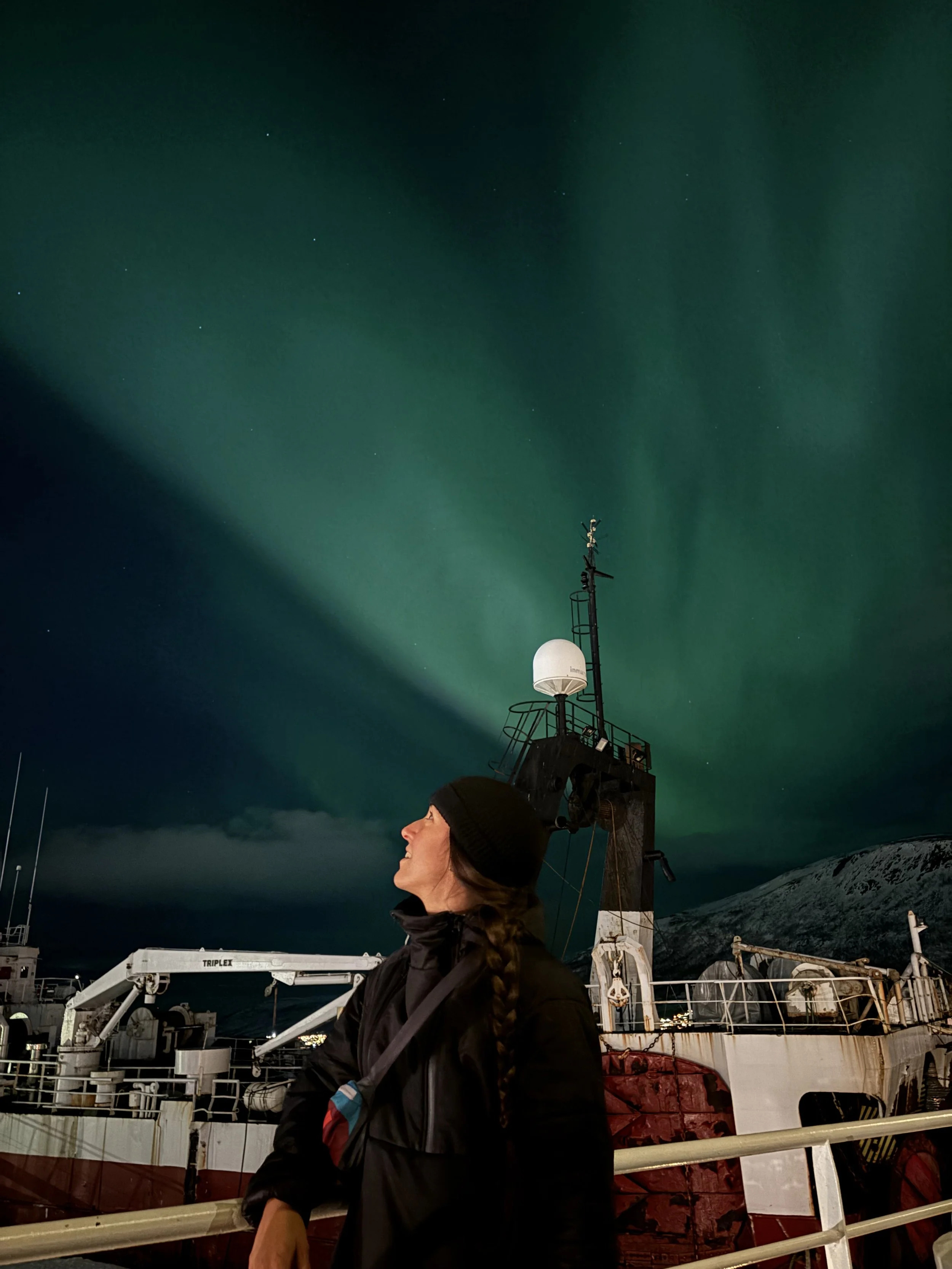
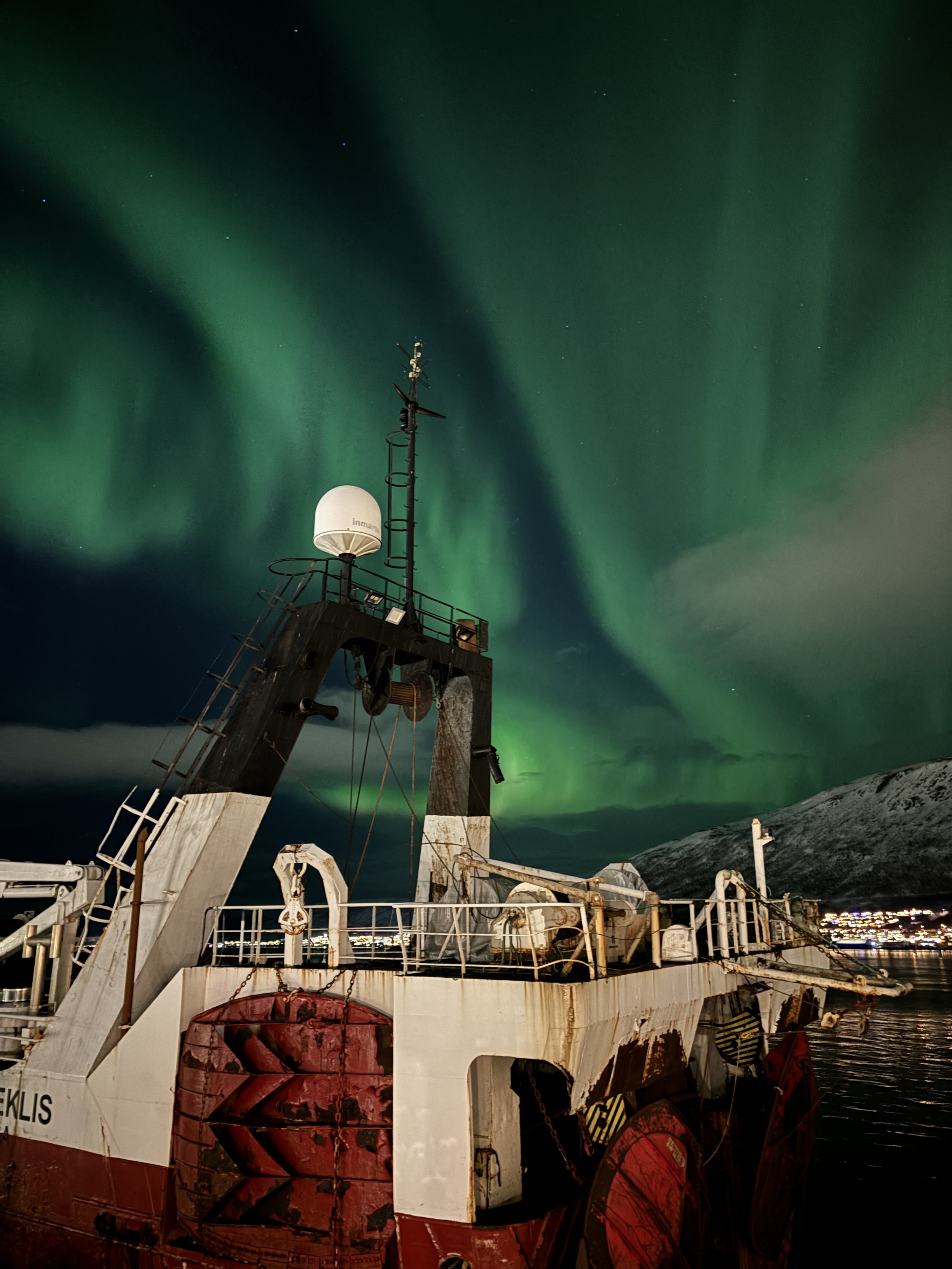
One final jump in time. On our first night in Tromsø, the Northern Lights welcomed us. No description or image does them justice. Yes, it’s physics. It is also something that speaks directly to our sense of belonging within the natural world. As with the white of the remote mountains, we were bathing in awe, trying to take in the magic it offered.
A few nights before the new year, I witnessed the most extraordinary fireworks of my life. What nature can do…
Hi, Sun.
On the last day before leaving Norway, I wondered how it would feel to see the Sun again. I felt curious and slightly impatient. I was reminded how vital the Sun is, even when filtered through clouds and I smiled the first time I felt its warmth on my skin again.
The value of such an experience is difficult to measure. What might appear as adventure becomes something else entirely when learning unfolds within a safe, controlled environment that is carefully held and collectively created. I believe moments of discomfort I chose to experience will serve me when challenges arise that I did not invite.
I carry deep gratitude for the people I shared this with, and for Tom, whose presence taught me what it means to find and choose a teacher to learn from.
Officially, one month of winter has passed. Two remain. I wish you to make the most of it.
Take care.
“Now the leaves have fallen.
The trees have pulled their aliveness
back in from their branches,
down into their fortress trunks
and the dark, subterranean closeness
of their roots.
Every year they let go of
exactly what everyone says
is most beautiful about them
to save their own lives.
The time will come
when you, too, have to drop
all the ways you’ve made yourself
worth loving,
and finally learn how
to sit quietly
right in the center
of your own small life.
Only there can you cry the tears
your life depends on.
Only there will you find
the tiny seed
that holds the whole mystery of you
and cradle it
in the warmth of your body
until the spring.”